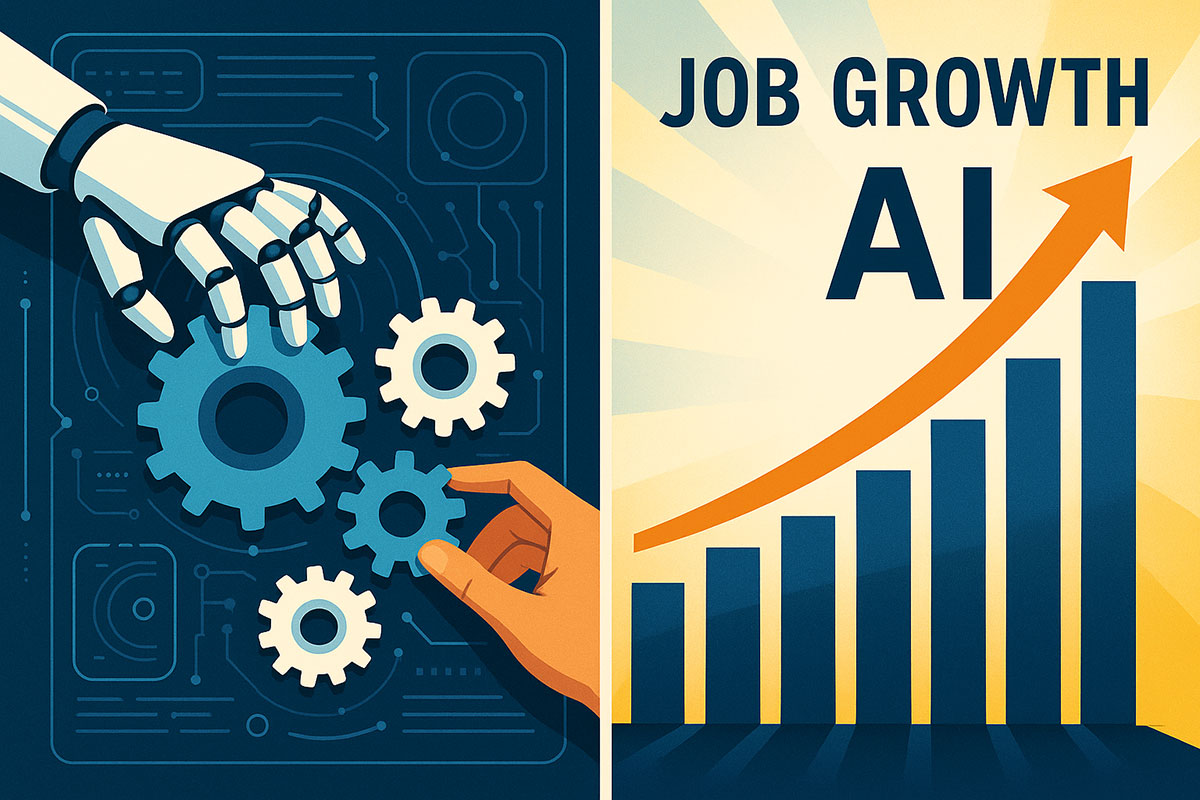
Introduction: The Great Transformation is Here
The conversation around AI and jobs has moved from theoretical speculation to measurable reality. In July 2025 alone, over 10,000 jobs in the United States were lost directly due to AI automation, ranking it among the top five causes of layoffs for the first time. Yet, simultaneously, the World Economic Forum projects that by 2030, while AI may displace 92 million jobs globally, it will create 170 million new ones—a net gain of 78 million opportunities. This paradox defines the 2025 job market: disruption and creation, happening in parallel. The key to navigating this shift is no longer guesswork; it's data. Recent research from Indeed provides an unprecedented look into the specific jobs and skills being transformed right now, offering a clear playbook for professionals and businesses ready to adapt and thrive.
The 2025 Landscape: By the Numbers
To understand the scale of the change, it's essential to look at the key metrics shaping the AI-driven labor market. The following data, compiled from recent industry reports, paints a picture of a market in rapid flux, where adaptation is the only constant.
| Metric | 2025 Data | Source & Insight |
|---|---|---|
| U.S. Job Losses to AI (July 2025) | 10,000+ | Ranked among the top 5 causes of layoffs, signaling AI's direct impact. |
| Global Job Displacement by 2030 | 92 Million | World Economic Forum projection, primarily routine cognitive and manual tasks. |
| Global New Jobs by 2030 | 170 Million | Roles in AI ethics, prompt engineering, data governance, and AI-integrated fields. |
| Decline in Traditional Entry-Level Postings | 15% (YoY) | Gen Z faces fewer corporate starter roles as AI automates foundational tasks. |
| Increase in Job Posts Requiring AI Skills | 400% (2-Year) | Surge in demand for AI-literate professionals across all sectors. |
Indeed's GenAI Skill Transformation Index: Which Jobs Are Changing Now
Indeed's groundbreaking research analyzed nearly 3,000 work skills to determine which occupations are most exposed to AI-driven change. Crucially, the study found that most jobs won't disappear—they will be transformed, with AI handling routine tasks and humans focusing on complex judgment and creativity. The following table summarizes the top 10 most impacted professions, based on the percentage of skills that can be changed or augmented by AI.
| Job Role | % of Skills AI Can Transform | Nature of the Transformation |
|---|---|---|
| 1. Software Development | 81% | AI writes basic code and fixes bugs; developers evolve into AI managers and complex system designers. |
| 2. Data & Analytics | 79% | AI crunches numbers and spots patterns; analysts focus on interpreting business meaning and strategy. |
| 3. Accounting | 74% | AI automates bookkeeping and tax calculations; accountants shift to financial advising and complex strategy. |
| 4. Marketing | 69% | AI generates ad copy and analyzes campaigns; marketers concentrate on creative strategy and customer relationships. |
| 5. Insurance | 70% | AI processes claims and checks policies; workers handle complex cases requiring human judgment. |
| 6. IT Operations & Support | 70% | AI monitors systems and handles basic tickets; IT professionals focus on complex troubleshooting. |
| 7. Administrative Assistance | 67% | AI manages schedules and routine requests; admins evolve into complex coordinators and relationship managers. |
| 8. Banking & Finance | 69% | AI automates transactions and basic analysis; bankers focus on complex financial planning. |
| 9. Customer Service | 66% | AI chatbots handle basic queries; service agents deal with complex complaints and empathetic solutions. |
| 10. Human Resources | 60% | AI screens resumes and schedules interviews; HR focuses on employee relations and complex workplace issues. |
Future-Proof Skills: The Hybrid Advantage in the AI Era
As the nature of work changes, so do the skills that define success. The most valued professionals will possess a hybrid skill set that blends technical know-how with deeply human-centric abilities.
1. Technical and AI Literacy
While not everyone needs to be a data scientist, basic fluency with AI tools and concepts is becoming non-negotiable. This includes familiarity with data visualization platforms like Tableau, understanding the principles of natural language processing, and a working knowledge of cloud platforms . For many technical roles, skills in Python and machine learning fundamentals remain in high demand.
2. Critical Thinking and Complex Problem-Solving
AI excels at processing data, but human judgment is required to interpret results in a real-world context and make strategic decisions. The ability to ask the right questions, challenge AI-generated conclusions, and devise creative solutions to novel problems is a uniquely human skill that is rapidly growing in value.
3. Emotional Intelligence and Empathy
As machines take over data-heavy tasks, human-centric capabilities like empathy, communication, and team collaboration become critical differentiators . These are the skills that AI cannot replicate and are essential for leadership, client management, and roles requiring human connection, such as nursing and childcare, which Indeed notes are among the least transformed by AI.
4. Adaptability and a Growth Mindset
With technology evolving at a breakneck pace, static skill sets are becoming obsolete. The most important meta-skill is the ability to learn, unlearn, and relearn continuously. Professionals who embrace change and proactively seek out new knowledge will thrive.
Strategies for Success: Thriving in the AI-Driven Workforce
Navigating this transition requires a proactive approach from both individuals and organizations.
For Professionals: Invest in Continuous Learning
Adopt a mindset of lifelong learning. This doesn't always mean going back to school for a formal degree. Online platforms like Coursera and LinkedIn Learning offer targeted courses and micro-credentials in AI and data analytics . Focus on building a portfolio of projects that demonstrate your hybrid skills to potential employers .
For Businesses: Lead the Transformation
The biggest barrier to successful AI adoption is often not the technology, but leadership. Companies must move beyond pilots and invest strategically in upskilling programs to help existing employees transition into new, AI-augmented roles. Creating cross-functional teams that combine domain experts with data specialists can foster a culture of innovation and smooth integration .
Conclusion: From Job Replacement to Human Empowerment
The data is clear: the AI impact on global jobs in 2025 is not an apocalypse, but a profound transformation. The narrative is shifting from job replacement to human empowerment. As routine tasks are automated, workers are being upgraded to focus on more strategic, creative, and meaningful work. The future of work is not humans versus machines, but humans with machines . By understanding the trends, investing in the right skills, and embracing a collaborative mindset, both professionals and companies can not only navigate the changes ahead but unlock new levels of innovation and productivity.
Related Reading
- The Future of Work in 2025: How AI is Redefining Careers and Skills
- Agentic AI: Your New Virtual Coworker is Here
About the Author
Girish Soni is the founder of TrendFlash and an independent AI strategist covering artificial intelligence policy, industry shifts, and real-world adoption trends. He writes in-depth analysis on how AI is transforming work, education, and digital society. His focus is on helping readers move beyond hype and understand the practical, long-term implications of AI technologies.