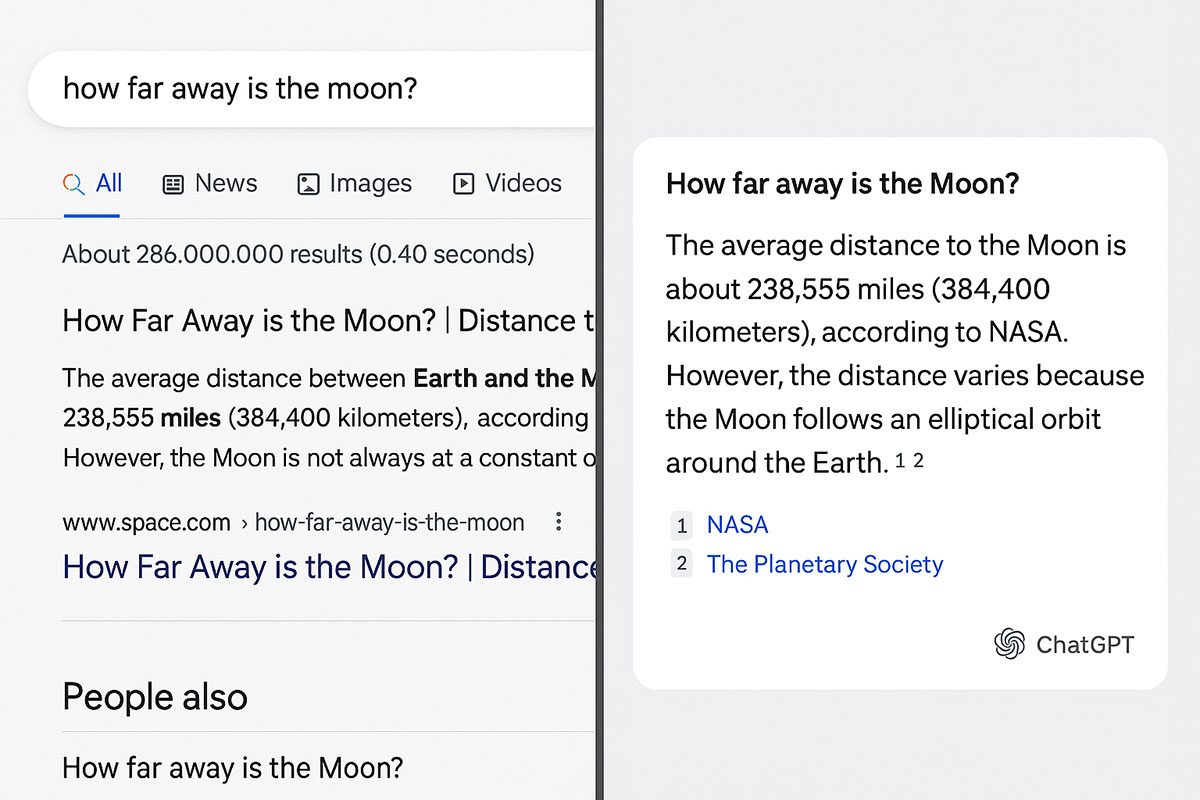
Introduction: The Shift from Links to Answers
For decades, SEO has been about optimizing for Google's algorithm to earn a top spot and a click. But a seismic shift is underway. Users are increasingly turning to AI assistants like Google Gemini, ChatGPT, and Perplexity for answers, and these platforms provide summarized, direct responses—often without a single click to the source website. With ChatGPT alone attracting hundreds of millions of users, understanding "AI SEO" is no longer optional for anyone relying on organic traffic.
How AI Search Engines Work (Differently)
Traditional search engines index web pages and return a list of links. AI search engines, or "answer engines," use large language models (LLMs) to synthesize information from multiple sources and generate a single, coherent answer.
- Perplexity AI: Excels at providing concise, well-cited answers for research and technical queries, with an average session lasting 23 minutes.
- ChatGPT: Used for general conversation, complex reasoning, and content creation. Its knowledge is based on its training data, but web-connected versions can pull in current information.
- Google Gemini: Deeply integrated with Google's ecosystem, it's often used for product research (46%) and price comparisons (37%).
This fundamental difference—providing an answer versus a list of links—is why your content strategy must evolve.
The Core Principles of AI Search Optimization
While a definitive rulebook doesn't exist yet, the core principle is to make your content an indispensable source for the AI. Your goal is for the LLM to choose your information to synthesize into its answer.
1. Authority and Expertise Matter More Than Ever
LLMs are trained on massive datasets and learn to prioritize information from sources that demonstrate deep expertise. Content that is accurate, well-researched, and cited by other experts is more likely to be used.
2. Clarity, Structure, and Comprehensiveness
AI models excel at parsing well-structured information. Use clear headings (H2, H3), bullet points, and tables to break down complex topics. Provide a complete, in-depth answer to a query on a single page, as this makes it easier for the AI to understand and extract the core information.
3. The Critical Importance of a Natural, Conversational Tone
People ask questions to AI in a natural, conversational language. Your content should be written to answer those natural language questions directly, using the same vocabulary your audience uses.
The AI-Optimization Checklist: How to Make Your Content "AI-Crawlable"
Here is a actionable checklist based on the core principles above. This is the most current guidance that can be synthesized from available data.
- ✅ Target Question-Based Keywords: Focus on long-tail, semantic keywords phrased as questions (e.g., "how does AI SEO work in 2025" instead of "AI SEO guide").
- ✅ Implement Comprehensive Structured Data: Use Schema.org markup (JSON-LD) to explicitly tell search engines and AI the type and structure of your content (e.g., `Article`, `FAQPage`, `HowTo`). This makes your data infinitely easier for AI to parse and use.
- ✅ Create Definitive, "10X" Content: Become the single best resource on a topic. If an AI is summarizing the top 5 articles on a subject, ensure yours is the most thorough and well-structured.
- ✅ Optimize for "E-A-T": Expertise, Authoritativeness, Trustworthiness. Demonstrate your credentials, cite authoritative sources, and link to them. Showcase author bios and site credentials.
- ✅ Use Clear, Descriptive Internal Linking: Help AI (and users) understand the context and hierarchy of your site by using descriptive anchor text in your internal links.
What We Still Don't Know: The Evolving Landscape
It is crucial to be transparent that this field is in its infancy. Key questions remain unanswered:
- Is there a direct, measurable ranking signal for AI search results akin to backlinks in traditional SEO?
- How do different AI models (Claude vs. Gemini vs. ChatGPT) weight and prioritize source information differently?
- What is the concrete business impact of being cited by an AI? How is "traffic" defined when a user gets the answer without a click?
Staying agile and continuing to monitor industry reports and official announcements from OpenAI, Google, and Anthropic will be essential.
Conclusion: Adapt or Become Invisible
The rise of AI search does not mean the death of SEO; it means its evolution. The foundational principles of quality, relevance, and authority are more important than ever. By shifting your strategy from chasing links to becoming the most citable, authoritative, and well-structured source of information in your niche, you can position your content to thrive in the age of AI-driven discovery. The time to start experimenting is now.
Related Reading
- How Google's AI Mode Will Change SEO in 2025
- Beyond ChatGPT: The Next Wave of NLP in 2025
- How AI Understands Human Language in 2025
About the Author
Girish Soni is the founder of TrendFlash and an independent AI strategist covering artificial intelligence policy, industry shifts, and real-world adoption trends. He writes in-depth analysis on how AI is transforming work, education, and digital society. His focus is on helping readers move beyond hype and understand the practical, long-term implications of AI technologies.